


On May 14, 2026, at the 6th Shenzhen International Conference on New Energy Storage Technologies and Engineering Applications, Zhiguang Electric Technology Chief Technical Expert Sun Kaifa delivered a keynote speech titled “Key Technologies and Applications of Cascaded Grid-Forming Energy Storage Converters.”
In the presentation, Sun revealed how Zhiguang Electric Technology is building a “stability anchor” for modern power grids through advanced energy storage converter technology.
Under the new power system characterized by “dual-high” features — high penetration of renewable energy and high penetration of power electronic equipment — weak-grid challenges such as low inertia and insufficient grid support are becoming increasingly prominent. Grid-forming energy storage has emerged as a key solution to these challenges. As the core equipment enabling this transformation, the performance of energy storage converters directly determines the strength of grid support capabilities.
Inherently Grid-Forming: From Grid-Following to Grid-Forming
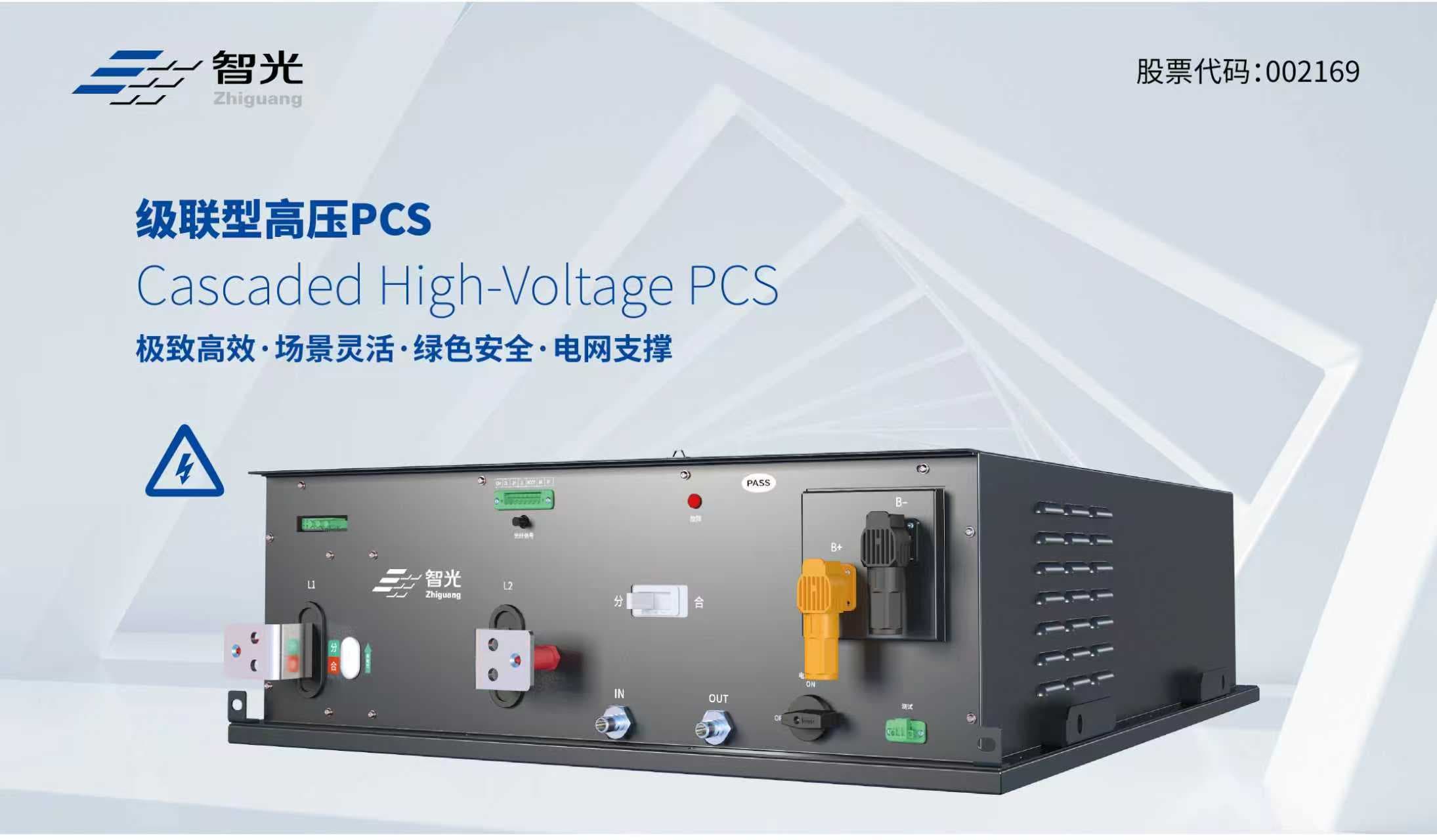
Compared with conventional low-voltage PCS solutions, Zhiguang Electric Technology’s cascaded high-voltage energy storage converter naturally possesses synchronous-generator-like characteristics through its unique topology and control strategy.
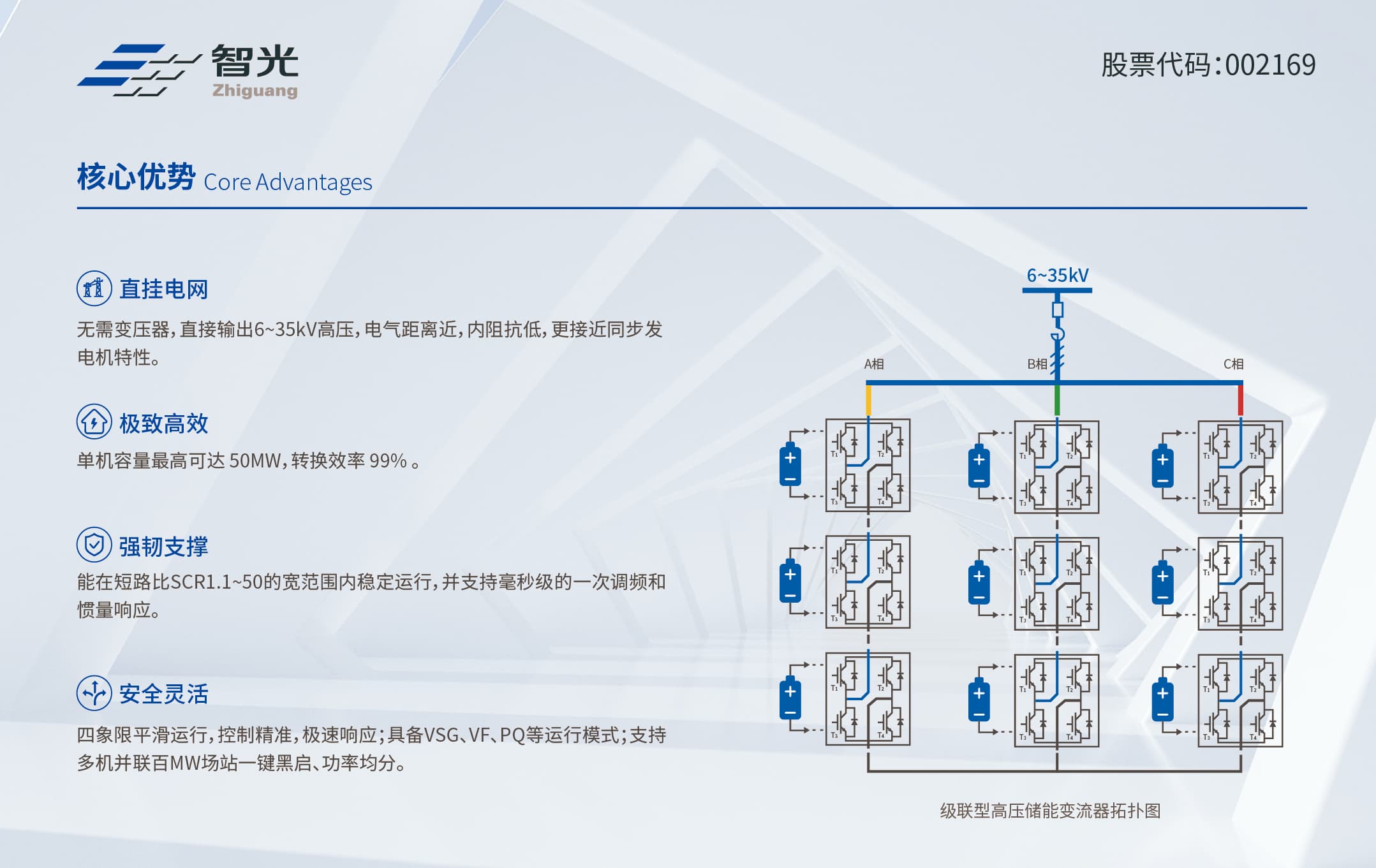
Direct Grid Connection: Transformer-free architecture with direct 6–35kV high-voltage output, enabling shorter electrical distance, lower internal impedance, and operational characteristics closer to synchronous generators.
Ultra-High Efficiency: Single-unit capacity of up to 50MW with conversion efficiency reaching 99%.
Robust Grid Support: Stable operation across a wide short-circuit ratio (SCR) range from 1.1 to 50, while supporting millisecond-level primary frequency regulation and inertia response.
Safe and Flexible Operation: Smooth four-quadrant operation with precise control and ultra-fast response; supports multiple operating modes including VSG, VF, and PQ; enables one-click black start and power-sharing for multi-unit parallel operation at 100MW-scale power stations.
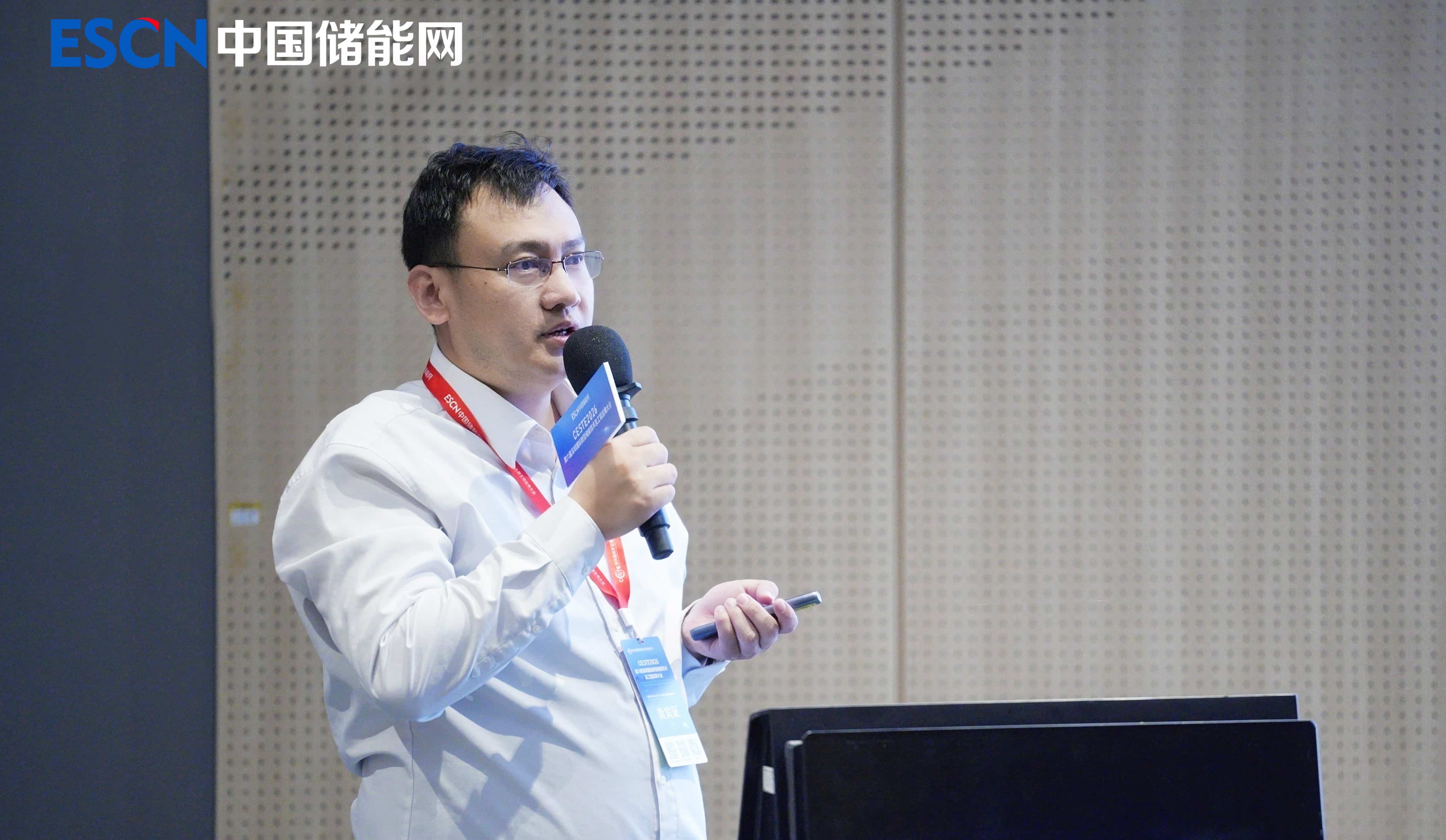
This was also the core message repeatedly emphasized by Sun during his speech: whether in technical parameters or operational characteristics, the cascaded high-voltage direct-grid-connected solution is the power electronic conversion technology that most closely resembles synchronous generators, capable of fundamentally strengthening grid stability.
Seven Core Technologies Solving Power Station-Level Stability Challenges
If system topology forms the backbone, control technology serves as the soul. Sun highlighted seven key technologies developed by Zhiguang around grid-forming cascaded high-voltage direct-grid-connected energy storage systems, each targeting some of the most critical operational challenges in modern power systems.
1.Power Station-Level Frequency Support: Enabling wind farms to achieve stability characteristics comparable to conventional thermal power plants.
2.Millisecond-Level Continuous Frequency Support: Successfully completed fault ride-through and continuous frequency support testing.
3.Transient Voltage Support Across Wide SCR Conditions: Achieved grid fault ride-through under SCR ≥1.1 conditions, covering a wide SCR range from 1.1 to 20.
4.Black Start Capability for Grid-Forming Wind Farms: Solved stable black-start operation challenges for fully power-electronic-based stations, with technology applicable to various large-scale power station projects.
5.Short-Circuit Voltage Support for Networked Systems: Successfully completed station-level artificial short-circuit testing, overcoming large-disturbance stability challenges in fully power-electronic networked systems.
6.Magnetizing Inrush Current Tolerance and Multi-Unit Load Sharing: Demonstrated excellent inrush current tolerance while enabling highly accurate power sharing among parallel units, significantly simplifying black-start procedures.
7.Synchronization and Seamless Load Transfer with Coal-Fired Units: Achieved stable coordinated control throughout the entire process of black start, synchronization, and grid connection between energy storage systems and coal-fired generating units.
Expanding Application Scenarios: Building Stability Anchors for Every Weak Grid Point
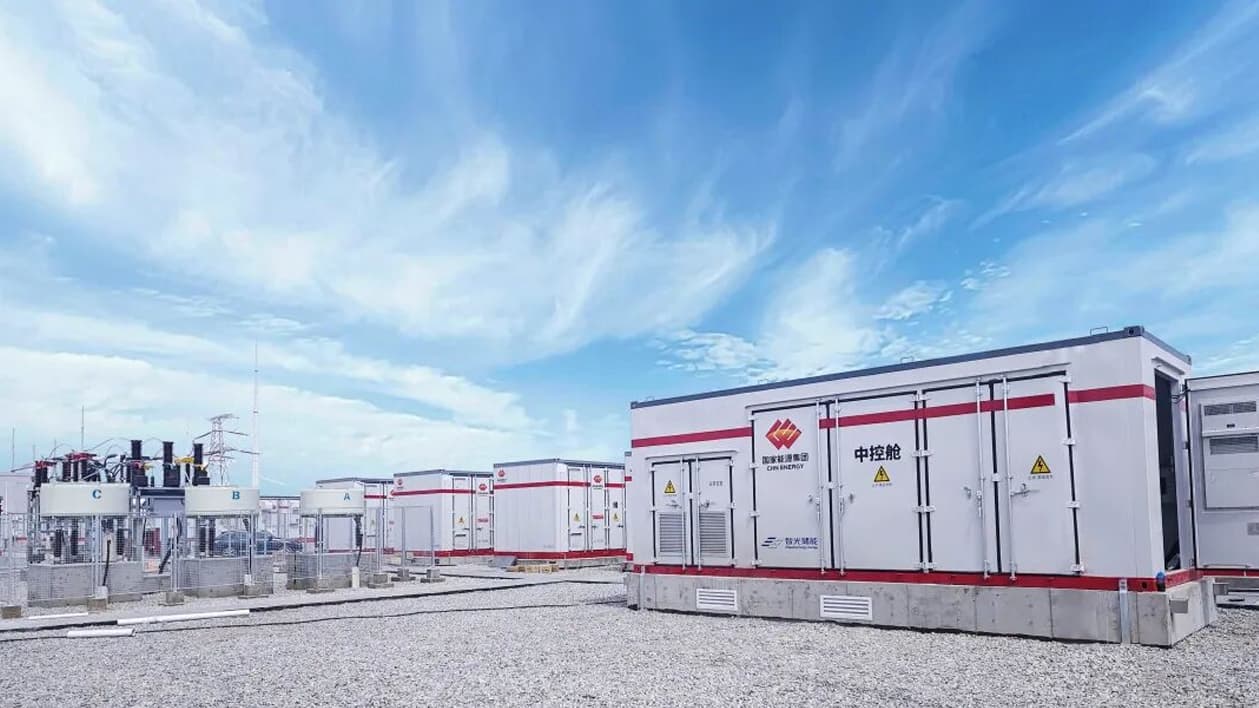
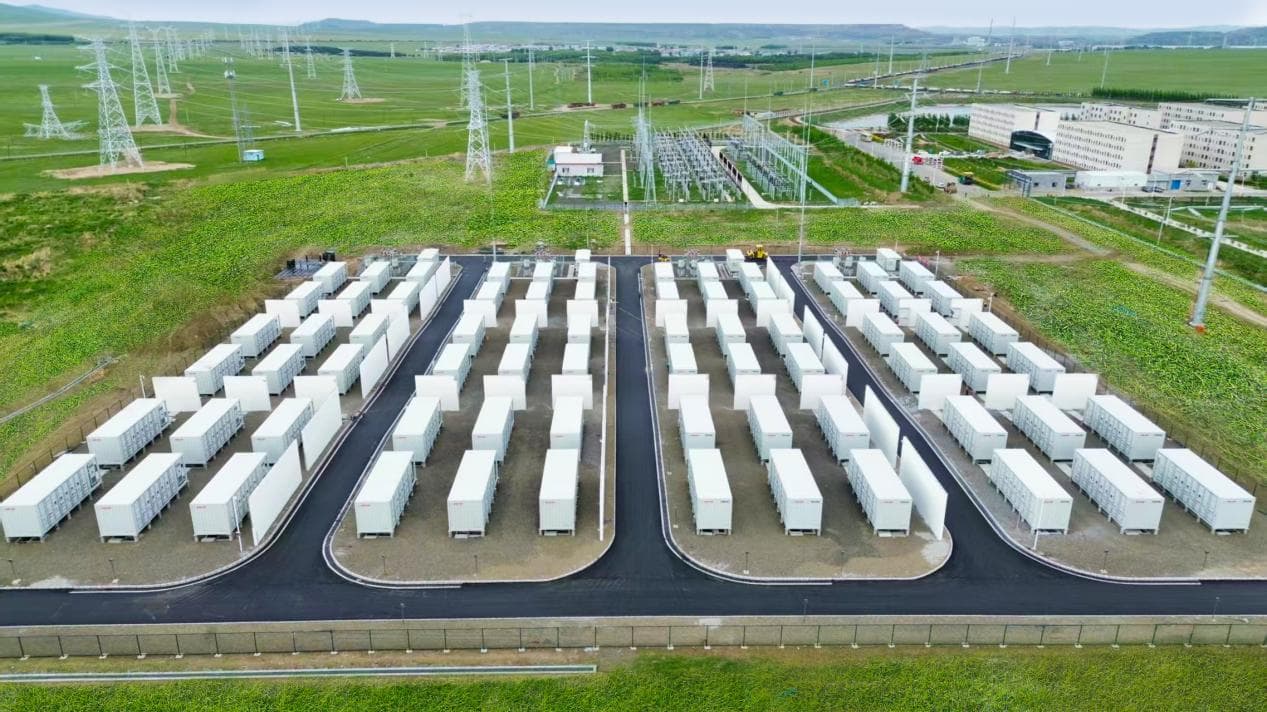
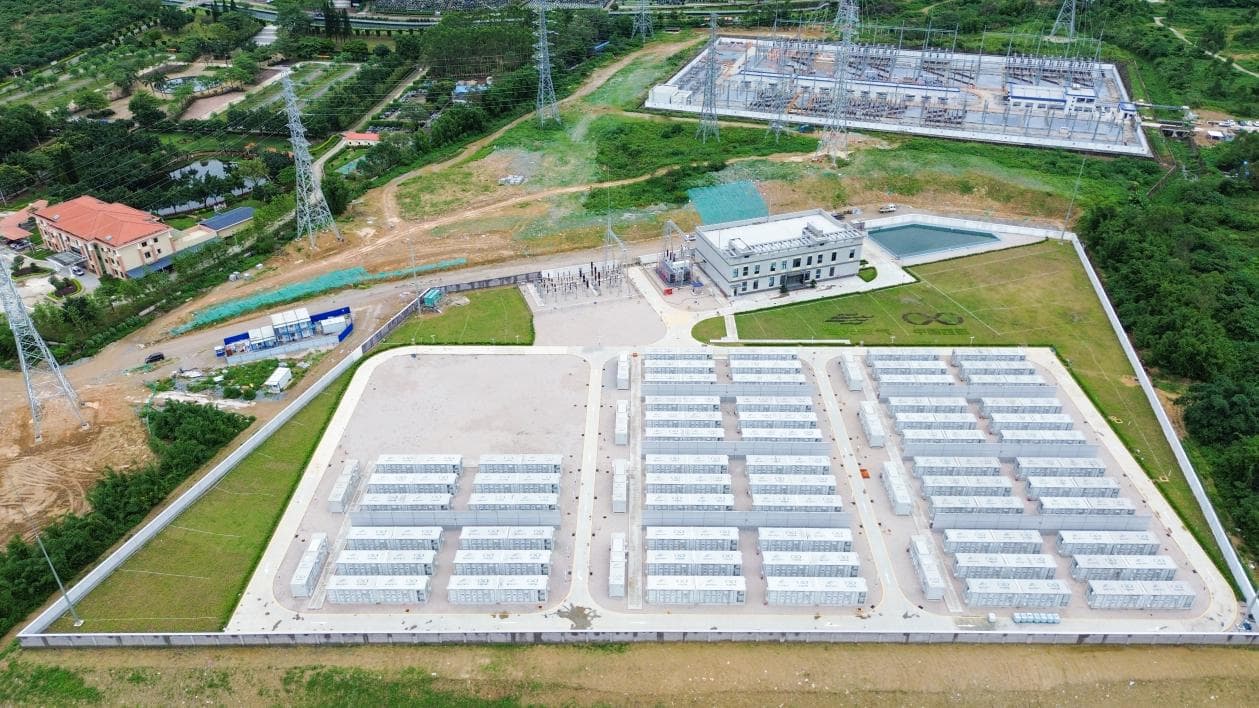
Sun further explained that the cascaded grid-forming PCS equipped with the above capabilities has already demonstrated its value as a “grid stabilizer” in multiple benchmark industry projects.
In the CHN Energy Qinghai Dachaidan Hybrid Energy Storage Demonstration Project, the system acts as the “grid-forming brain,” integrating lithium batteries, supercapacitors, and multiple storage technologies to achieve the world’s first wide-timescale hybrid energy storage application.
In the Chuangyuan Metal 35kV Grid-Forming Energy Storage Project in Inner Mongolia — currently the largest user-side grid-forming energy storage project in China by installed capacity — the system enabled seamless “zero-perception” switching to microgrid operation during unexpected grid disconnection events.
Meanwhile, in the Qingyuan Independent Energy Storage Power Station Project in Guangdong, the technology supports Guangdong Province’s first GWh-scale standalone energy storage station, providing daily inertia support and dynamic reactive power compensation for the grid.
As an innovator in high-power power electronics technology, Zhiguang Electric Technology continues to drive industry advancement through breakthroughs in core technologies. Sun’s presentation not only demonstrated the company’s leadership in cascaded grid-forming energy storage converters, but also provided valuable insights for the upgrading and large-scale deployment of next-generation core energy storage equipment.
Looking ahead, Zhiguang Electric Technology will continue deepening its expertise in high-power power electronics, accelerating the deployment of cascaded grid-forming energy storage converters across broader application scenarios, and contributing core technological strength toward building a safer, more efficient, and greener next-generation power system in support of China’s dual-carbon goals.
