


From March 31 to April 3, 2026, the 14th Energy Storage International Summit and Exhibition (ESIE 2026) was grandly held at the Beijing Capital International Exhibition Center.
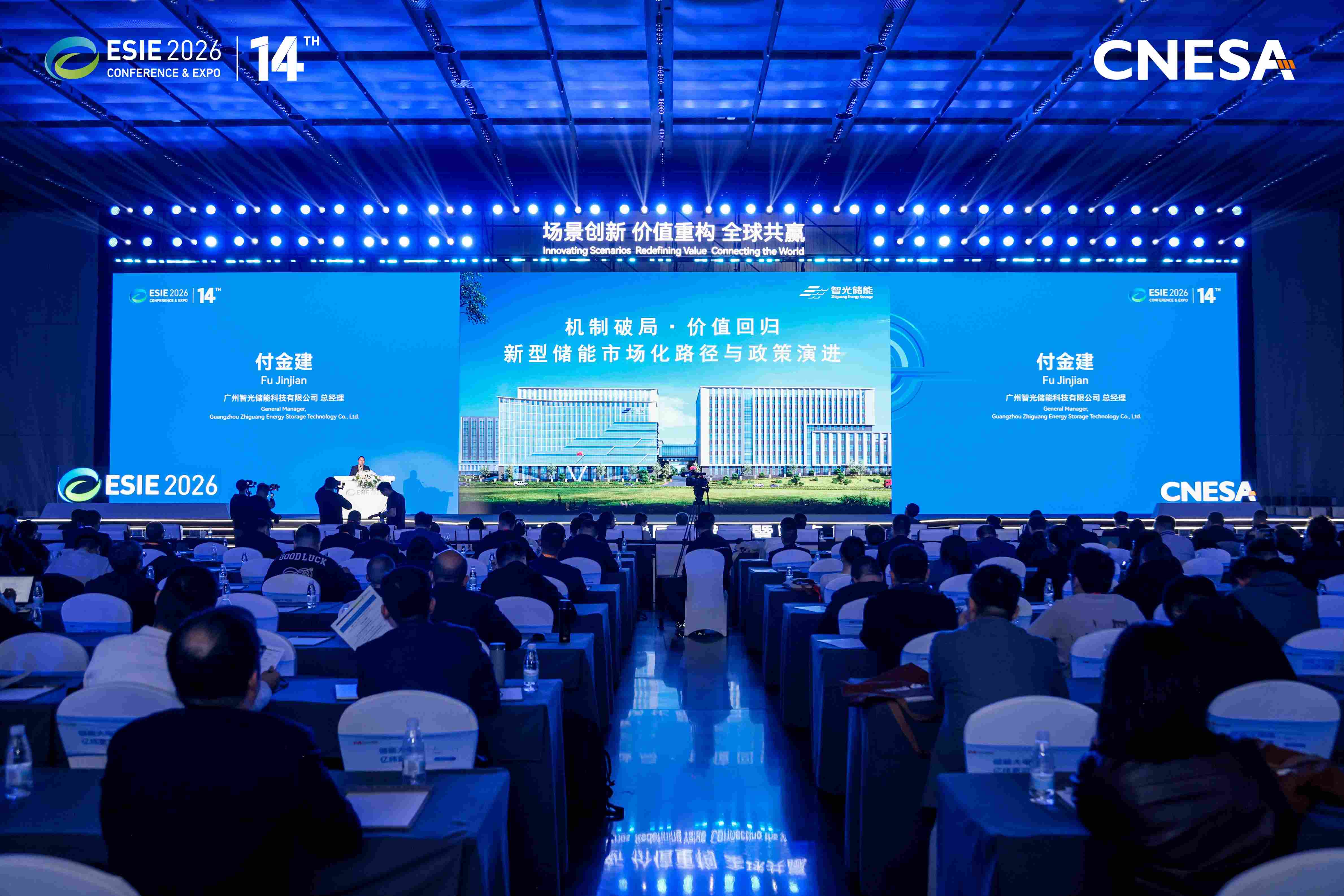
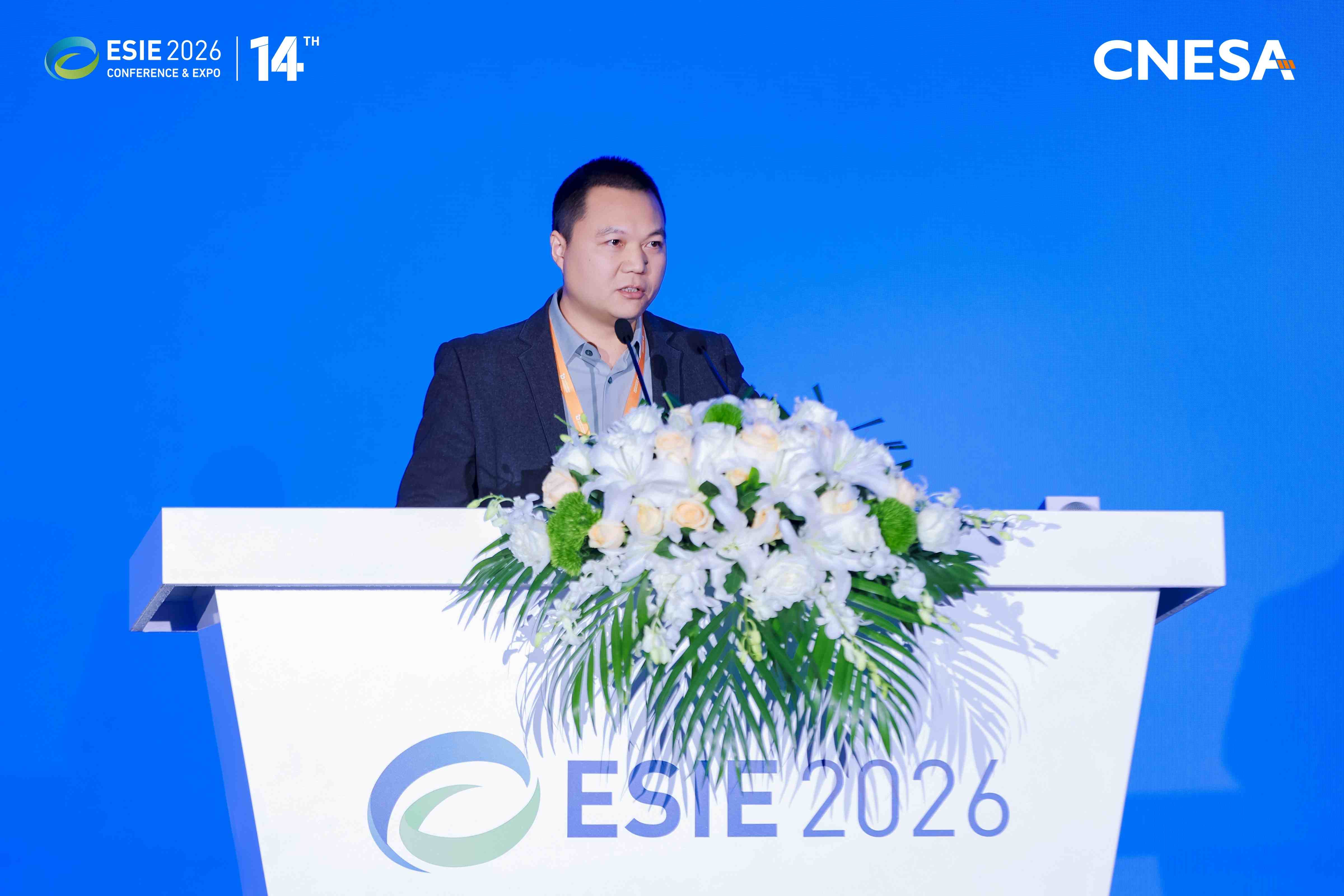
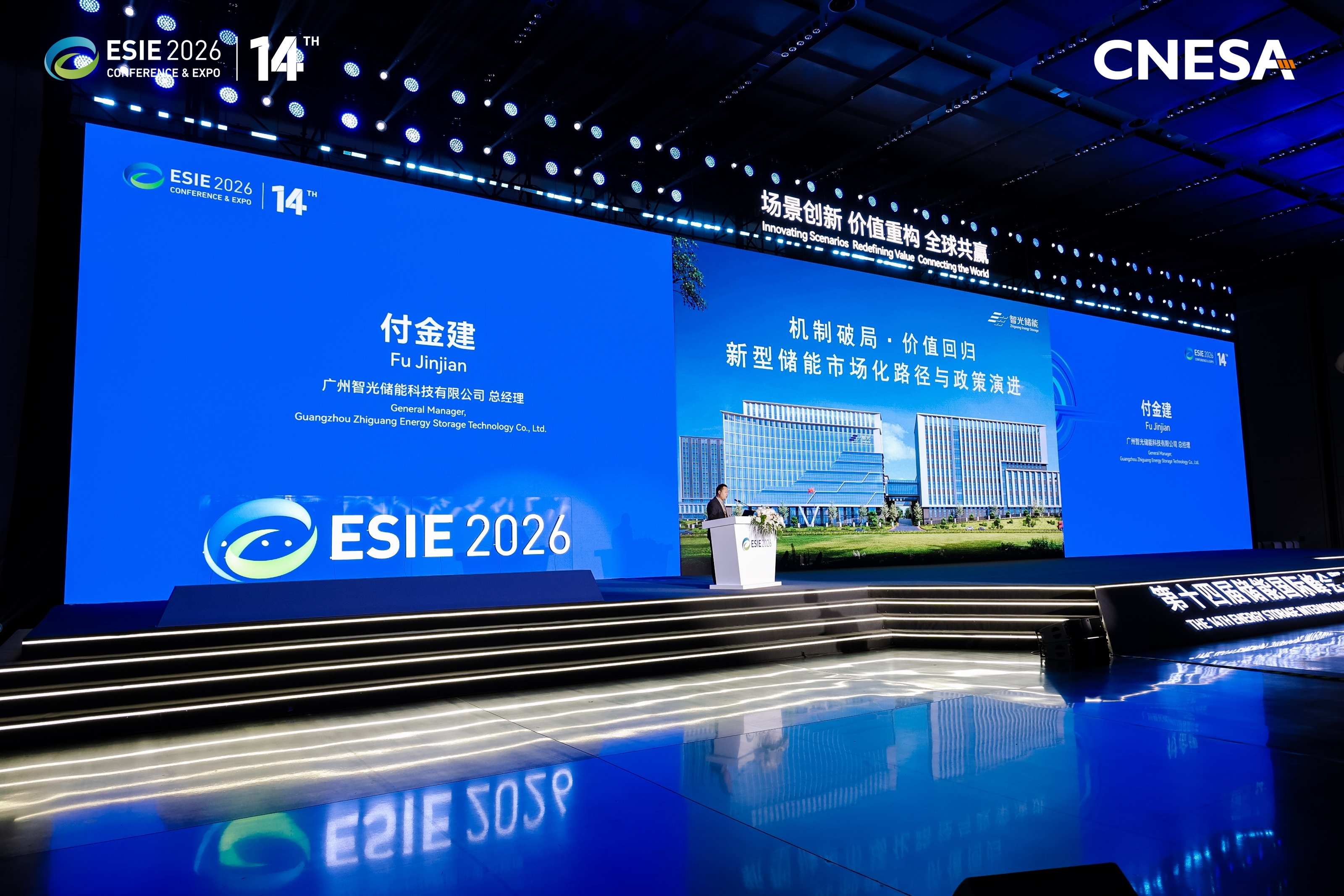
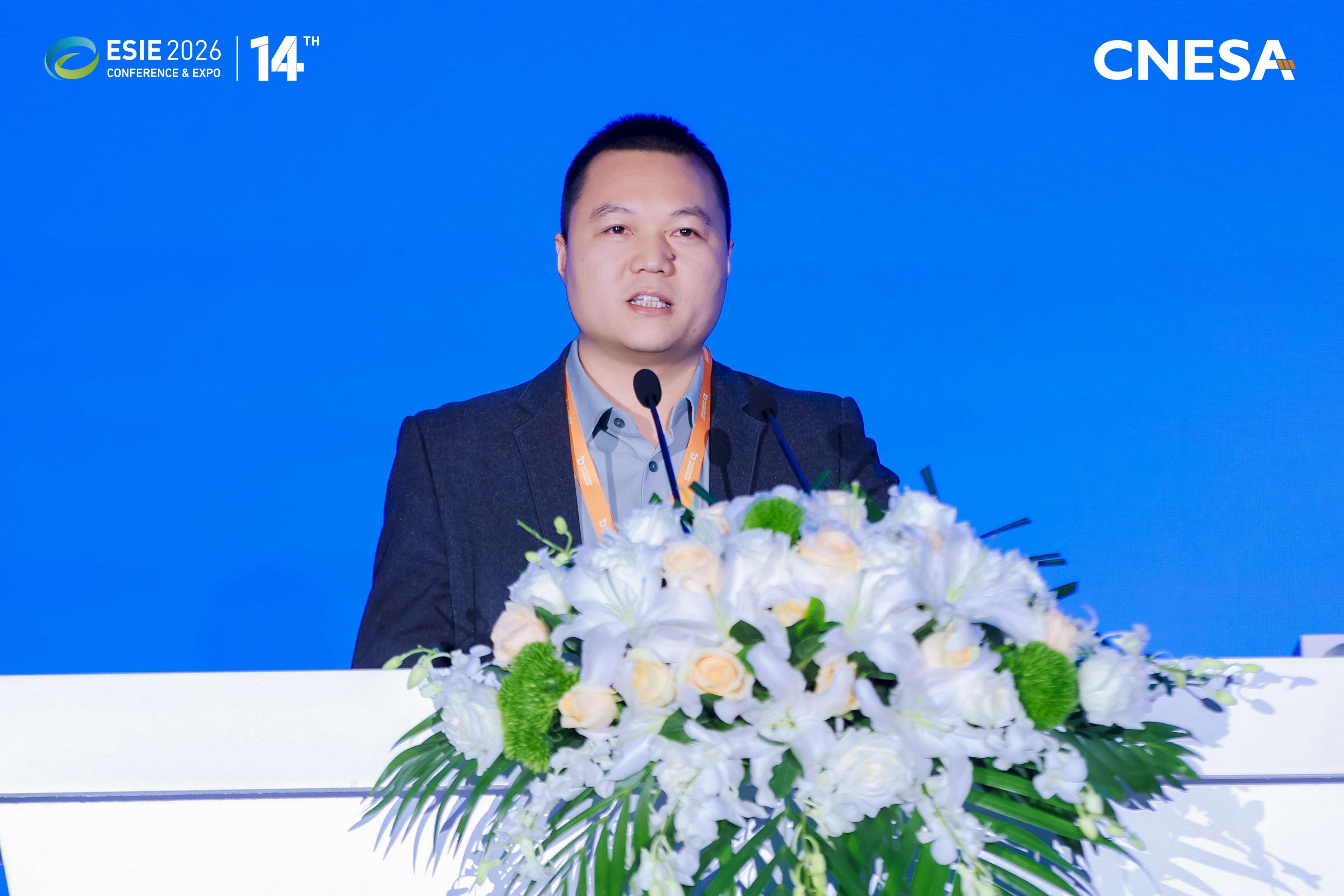
Fu Jinjian, General Manager of Guangzhou Zhiguang Energy Storage Technology Co., Ltd. (hereinafter referred to as “Zhiguang Energy Storage”), was invited to attend the main forum and delivered a keynote speech titled “Breaking Mechanism Barriers, Returning to Value — Market-Oriented Pathways and Policy Evolution of New Energy Storage.” In his speech, he provided in-depth insights into policy trends, market demand, and technological pathways, and pointed out that the energy storage industry is shifting from price competition to value-driven competition. He emphasized that high efficiency, superior performance, enhanced safety, and full lifecycle services will be key to driving high-quality industry development.
Fu noted that China’s energy structure is rapidly transitioning toward a renewable energy-dominated system. The power supply-demand landscape is characterized by ample overall supply and energy availability, but insufficient peak capacity. In 2025, China’s total electricity consumption exceeded 10 trillion kWh for the first time, with renewable energy contributing 97.1% of incremental demand. By 2026, solar PV installed capacity is expected to surpass coal power for the first time, with combined wind and solar capacity accounting for more than half of total installations. With the implementation of policies such as Document No. 136, No. 114, and State Council Document No. 4, electricity market reform is accelerating. Energy storage is evolving from a supporting role into a system stabilizer, with capacity compensation and market-based trading becoming core revenue sources.
Drawing on market practices across different regions, Fu highlighted that the three major markets—energy trading, ancillary services, and capacity—are setting clear performance requirements for energy storage. In Shanxi’s spot market, price spreads are well-defined, and round-trip efficiency directly determines profitability. In Guangdong’s frequency regulation market, a strong head effect is evident, where system performance (Kp) is the key to returns. In Gansu, under high renewable penetration scenarios, the duration of maximum power discharge determines capacity compensation revenue. Overall, there remains room for improvement in system efficiency across the industry, with technical performance becoming the key differentiator for profitability.
Addressing industry pain points, Fu shared Zhiguang Energy Storage’s solutions: a commitment to high efficiency, superior performance, strong consistency, and high safety. The company promotes its self-developed cascaded high-voltage direct-connected energy storage system, while offering full lifecycle services covering delivery, operation, and maintenance. Data shows that for a 200MW/800MWh project, system efficiency improved from 85% to 90%, increasing first-year revenue by RMB 5.9 million and boosting return on equity by 2.72 percentage points, demonstrating significant economic benefits. Zhiguang Energy Storage has already deployed multiple benchmark projects, including Qingyuan Qingcheng, Chuangyuan Metal, and CHN Energy Qinghai, covering generation-side, grid-side, and user-side applications.
Looking ahead, Fu believes that energy storage revenue streams are evolving from single to diversified sources, with competition shifting toward five key dimensions: product capability, efficiency, performance, operations, and maintenance. As the national unified electricity market accelerates, energy storage will play an increasingly vital role in the new power system. As a pioneer and leader in cascaded high-voltage, large-capacity energy storage technology, Zhiguang Energy Storage will continue to drive innovation in this field, empowering the development of new power systems through value creation and providing benchmark solutions for the global energy transition.
